
Ionic Energy
Across the hidden layers of the atmosphere, the surface of the earth, and the boundaries between air and water, there exists a quiet architecture of dispersed charges and ionic flows an architecture that conventional energy systems rarely acknowledge. Unlike classical sources that depend on direct sunlight or mechanical motion, these ionic patterns are part of the planet’s natural behavior: continuous, widespread, and active at every hour of the day.
At RenergyAI, the Ionic Energy division is built on this foundation. We explore the idea that energy can emerge from subtle differences in charge, from the movement of ions in wind and moisture, from the contrast between warm and shaded surfaces, and from the natural dynamics of coastal and atmospheric environments. This field is still at the beginning of its scientific journey, yet the signals are clear: the Earth carries persistent ionic structures that can be transformed into a stable and environmentally harmonious source of power.
This section introduces several research pathways that examine different aspects of ionic energy—from the behavior of ions in natural environments to the development of active surfaces and advanced materials. Together, these pathways outline the vision RenergyAI is shaping for the future of clean energy: a future where power is drawn from the planet’s own subtle electrical rhythms, rather than imposed upon it.
Research Pathways
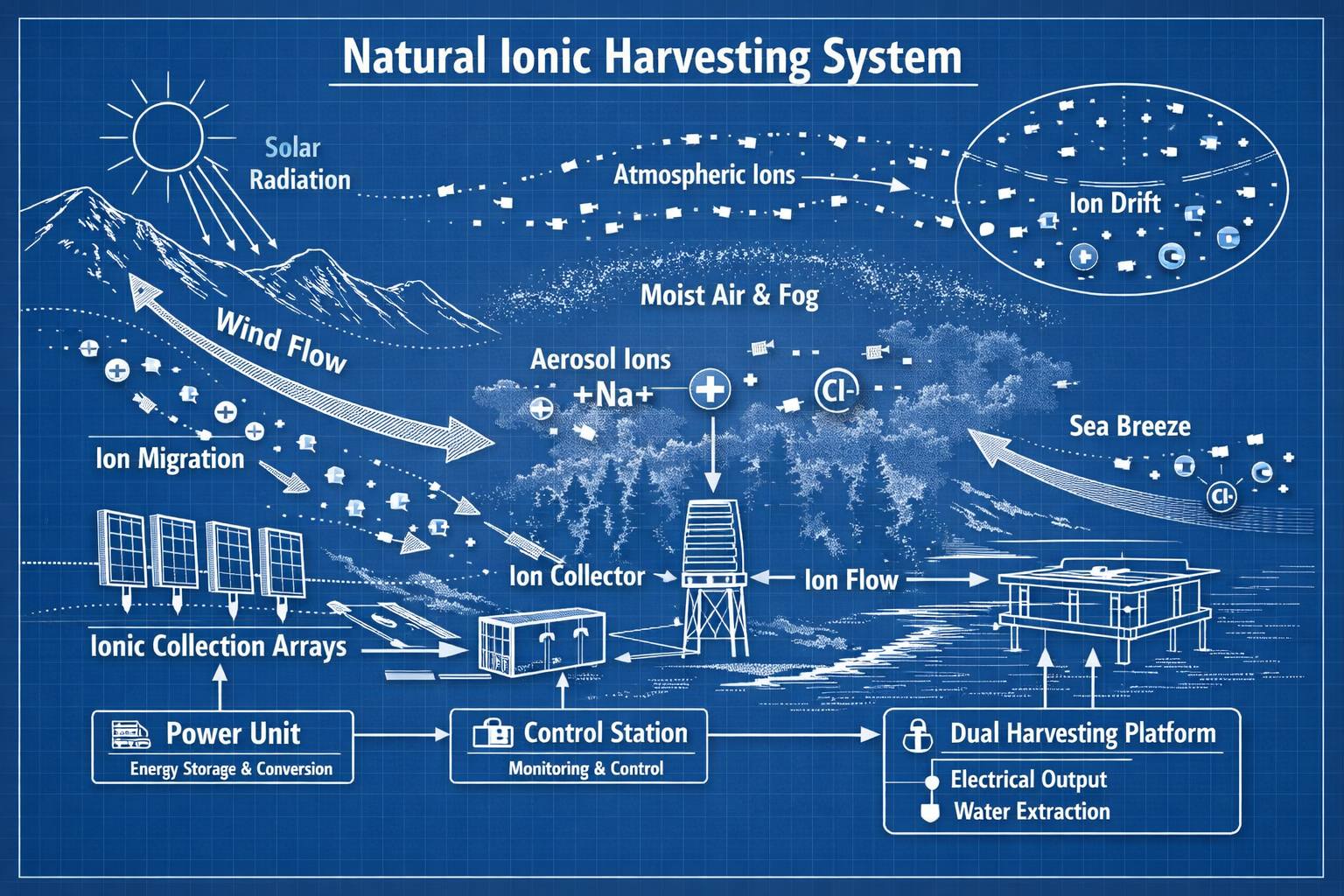
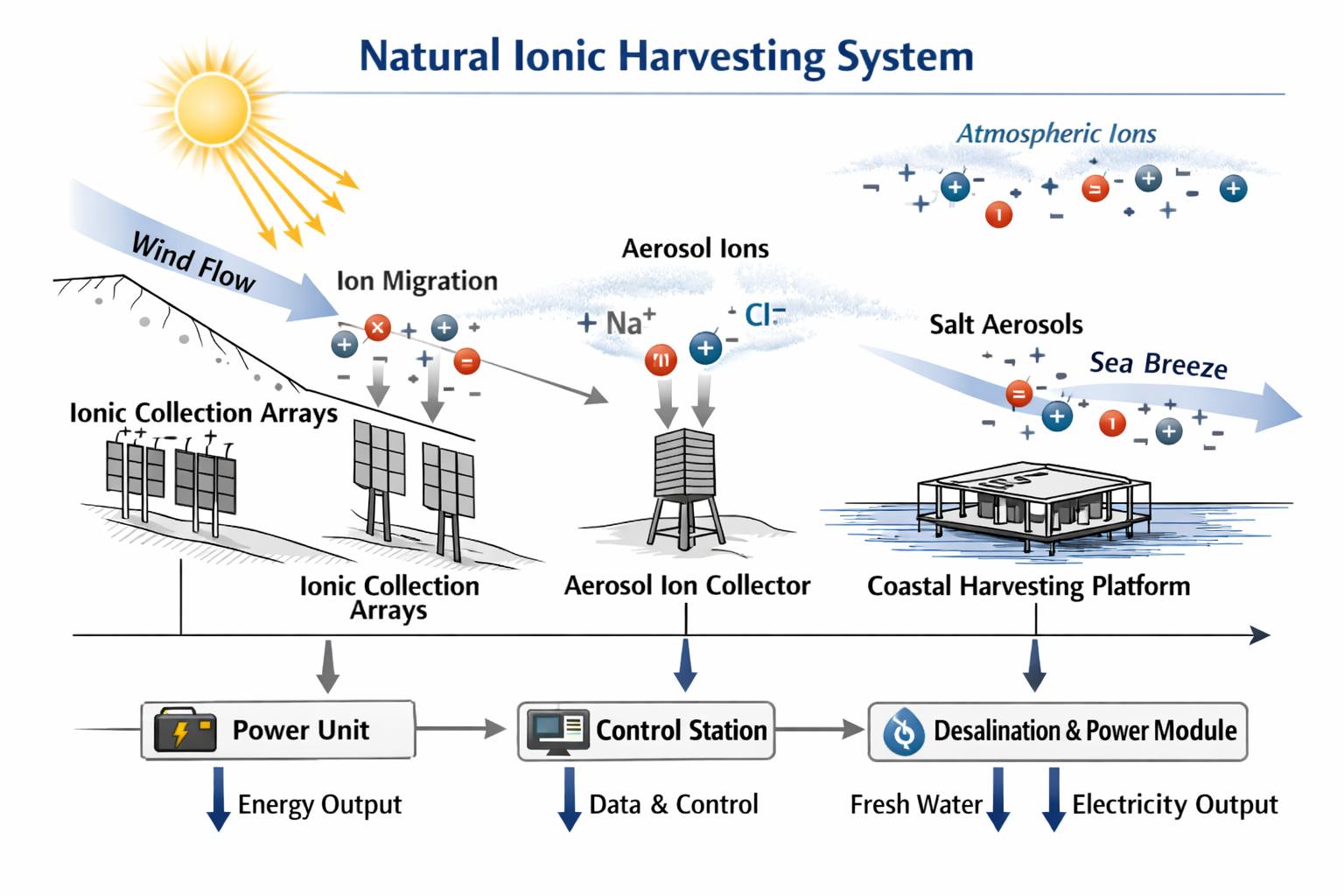
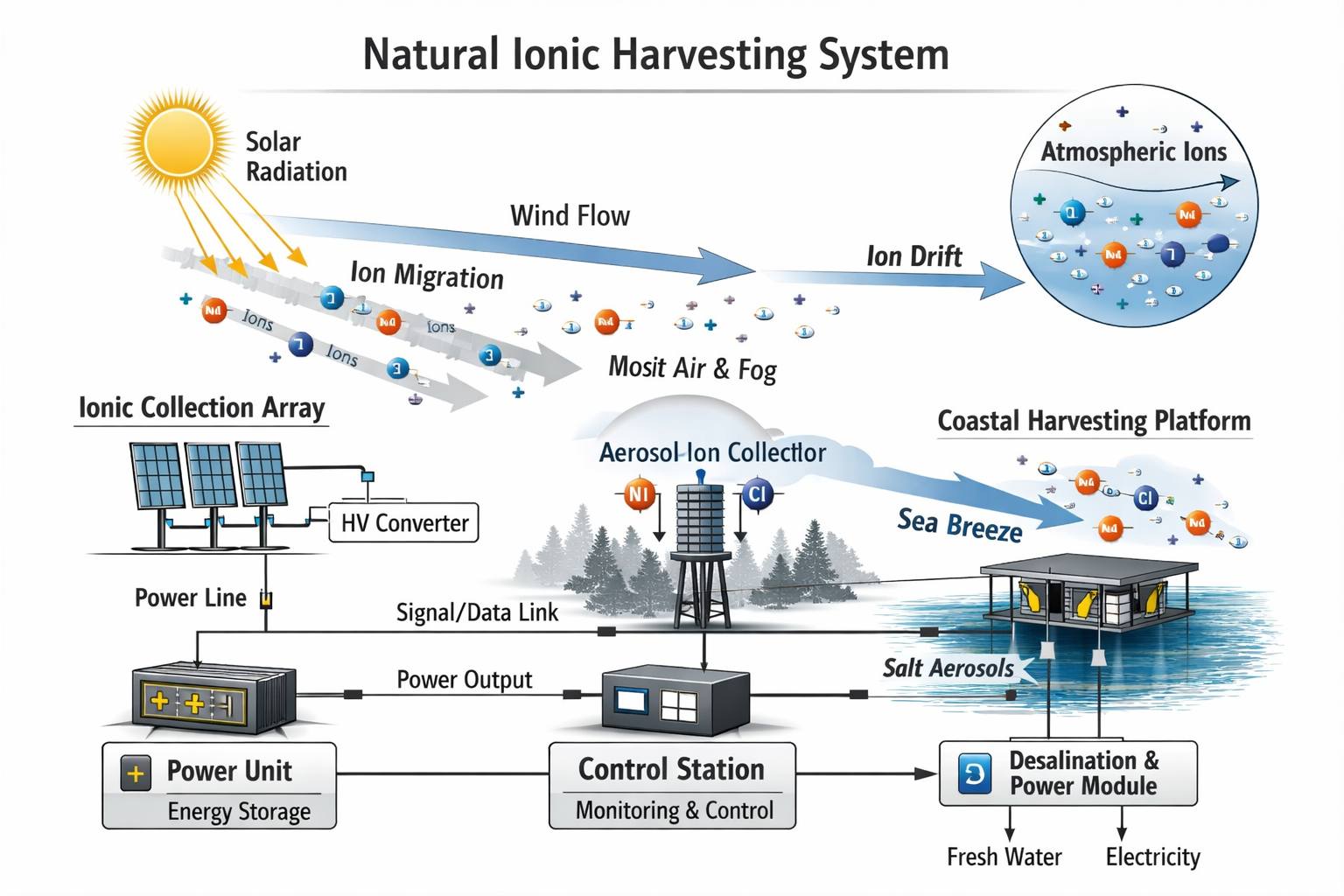
1) Natural Ionic Harvesting Systems
Studying the behavior of dispersed charges in wind, moisture, fog, and surface gradients, and evaluating their potential as a continuous energy source.
2) Next‑Generation Active Ionic Surfaces
Exploring surface technologies capable of collecting environmental charge and converting it into electrical power, with the goal of achieving stable, low‑impact energy generation.
3) Coastal Water–Energy Hybrid Systems
Investigating the unique potential of humid and fog‑rich coastal regions to support simultaneous production of clean energy and potable water.
4) Advanced Materials for Charge Absorption and Transport
Developing lightweight, environmentally compatible materials designed to efficiently absorb and transport ionic charge from natural environments.
5) Earth‑Scale Ionic Energy Modeling
Analyzing ionic behavior across large landscapes—from mountain slopes to coastal zones and arid regions—to inform the design of next‑generation energy systems.