
Environment
Environment examines Earth through the lens of ionic science—a perspective that reveals hidden energetic structures and potentials that have long been overlooked. While ions may appear scattered or insignificant at first glance, they carry substantial latent energy and form the underlying architecture that sustains the planet’s ecological balance. Understanding these ionic foundations opens new pathways for addressing environmental challenges and restoring stability to natural systems.
The Ionic Perspective on Earth
This framework views Earth not only as a physical system but as a dynamic ionic ecosystem.
Key principles include:
- Ions as structural elements: Ionic gradients shape atmospheric behavior, surface interactions, and ecological continuity.
- Latent energy potential: Despite their low density, ions collectively hold significant usable energy.
- Continuity of life: Ionic fields have supported the emergence and persistence of life across geological timescales.
This perspective reveals that many environmental processes—weather formation, climate stability, and ecological resilience—are deeply connected to ionic behavior.
Untapped Potential in Ionic Systems
Modern technology has focused heavily on solar and wind systems, often without considering their unintended consequences:
- Solar farms: Large‑scale installations increase local temperature, alter soil moisture, and disrupt micro‑climates.
- Wind turbines: Turbine arrays modify airflow patterns, humidity distribution, and local atmospheric stability.
In contrast, ionic energy systems operate in harmony with Earth’s natural architecture.
They utilize existing gradients rather than imposing new mechanical or thermal disturbances.
Harnessing ionic potential offers:
- Low‑impact energy extraction
- Compatibility with natural ecosystems
- Minimal alteration of atmospheric or surface dynamics
This makes ionic technology one of the most environmentally aligned approaches available.
Environmental Challenges Through an Ionic Lens
Many ecological disruptions can be reinterpreted—and potentially resolved—through ionic mechanisms:
- Degradation of soil and water systems linked to ionic imbalance
- Atmospheric instability driven by disrupted ion flows
- Loss of biodiversity associated with weakened ionic signatures in ecosystems
- Climate anomalies emerging from large‑scale field disturbances
By restoring ionic coherence, environmental systems can regain stability without invasive interventions.
Atmospheric and Surface Interactions
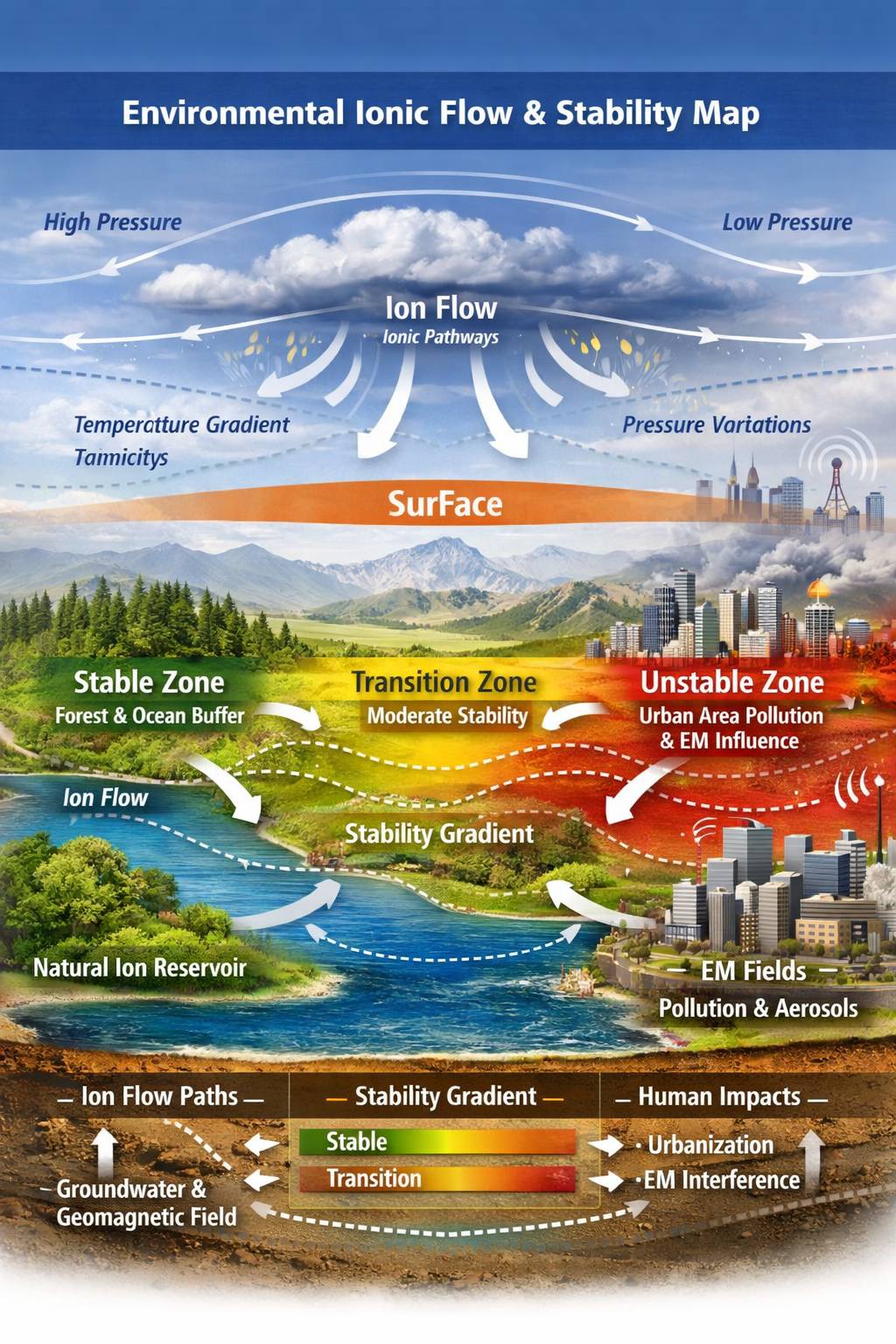
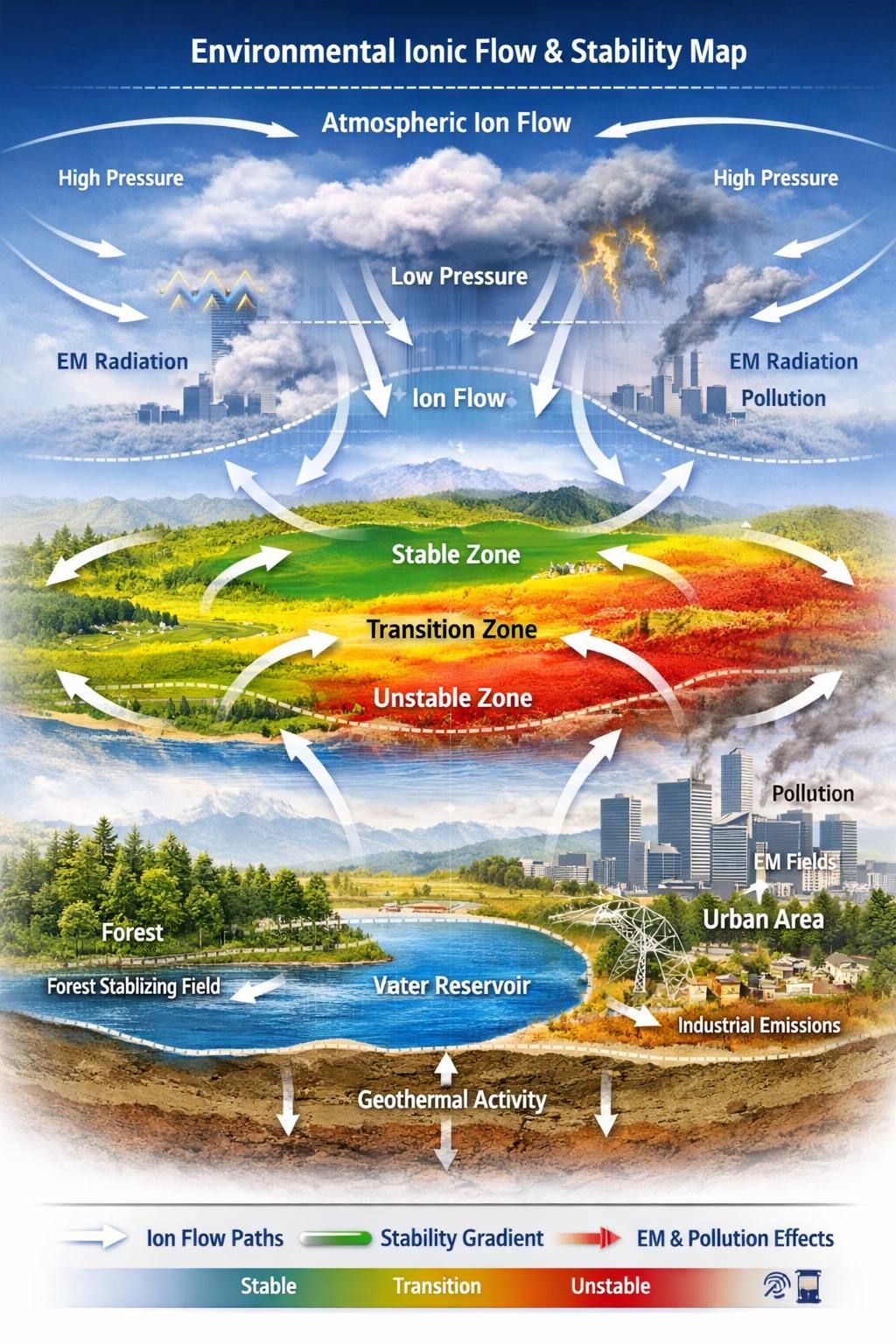
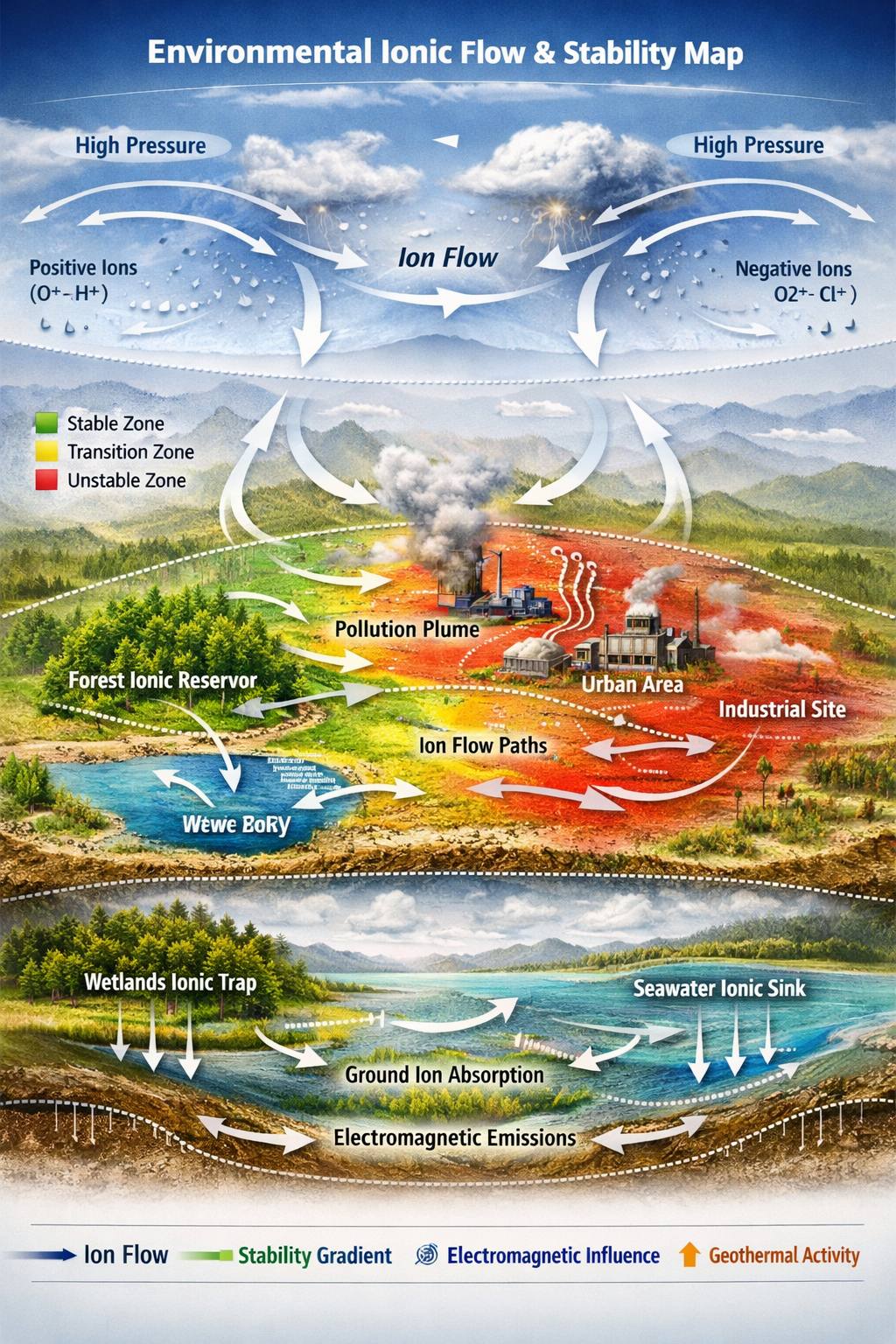
The environment continuously shapes and is shaped by ionic fields:
- Atmospheric layers influence ion density, cloud formation, and storm behavior
- Surface materials absorb, redirect, or amplify ionic energy
- Ecosystems generate distinct ionic signatures that regulate local climate
- Water bodies act as major ionic reservoirs and stabilizers
These interactions form the operational foundation of Earth‑Energy Dynamics.
Human Influence on the Ionic Environment
Human activity has introduced new variables into the ionic system:
- Pollution and aerosols disrupt natural ion formation
- Urban structures alter field geometry and airflow
- Electromagnetic emissions interfere with ionic coherence
- Land degradation weakens natural ionic reservoirs
Understanding these impacts is essential for designing restorative strategies that align with Earth’s natural energetic architecture.
Modeling and Predictive Analysis
Environment provides the analytical tools needed to interpret and forecast ionic behavior:
- Ionic field modeling for understanding environmental influence
- Stability mapping to identify vulnerable or resilient zones
- Predictive simulations for anticipating environmental shifts
- Integration with climate models to enhance accuracy and resolution
These models support advanced applications such as environmental reset systems, weather modulation, and ion‑based energy harvesting.
Articles in This Section
- Environmental Ionic Behavior
- Climate–Ion Interaction
- Surface Energy Ecology
- Human Impact on Ionic Environment
- Predictive Environmental Ion Modeling
- Ion‑Signature–Guided Environmental Stabilization (ISGES)
- Sea‑Surface Ion Energy Extraction
- Environmental Reset Systems
- Ion‑Driven Weather Control Concepts