
ISSM Model — Integrated Space–Structure Model
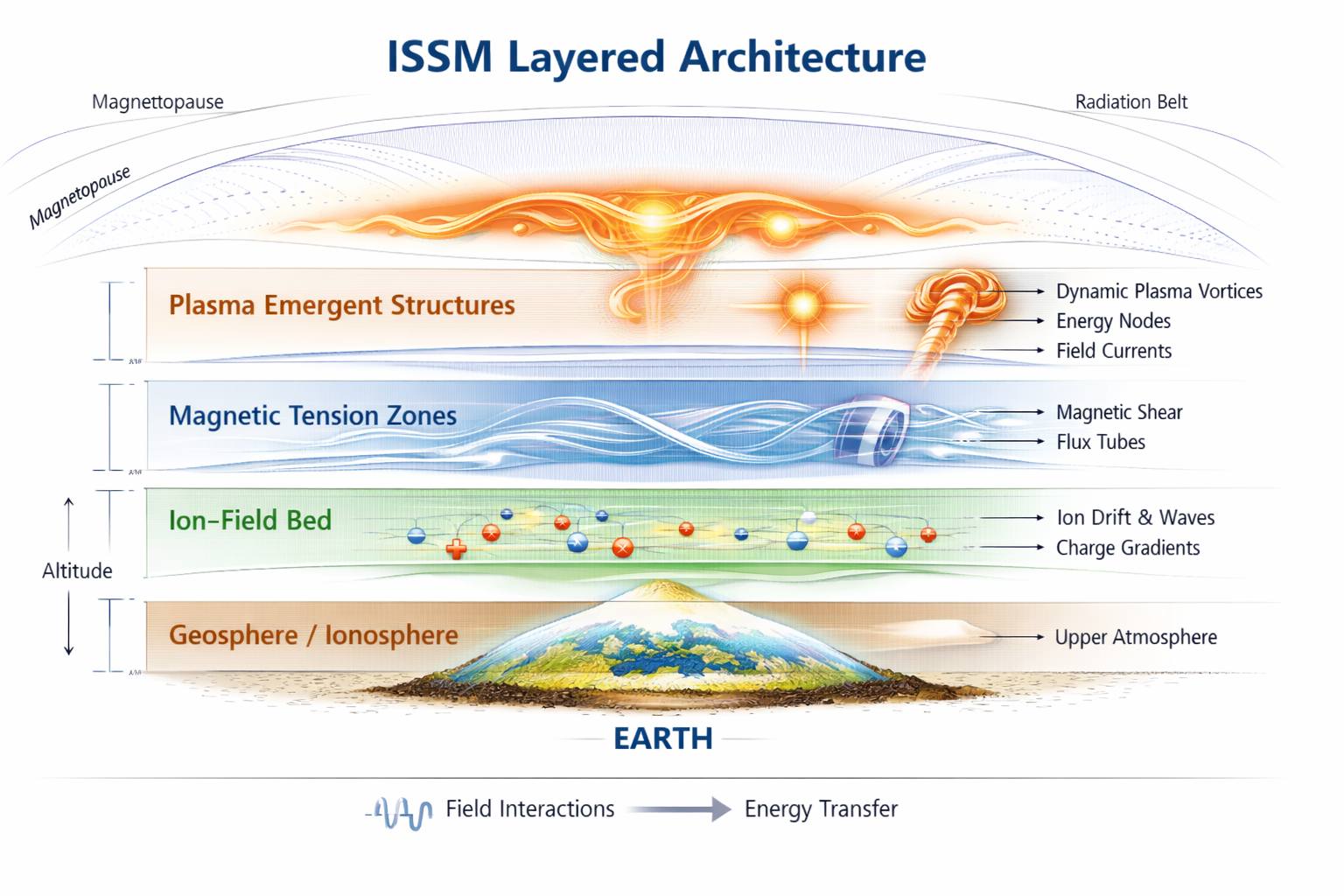
The ISSM Model introduces a new way of understanding near‑Earth space: not as an empty or weakly populated region, but as an active ion–magnetic architecture shaped by the interaction of charged particles, magnetic tension, and plasma dynamics. In this view, space forms layered structures that behave as a self‑organizing system rather than a random environment.
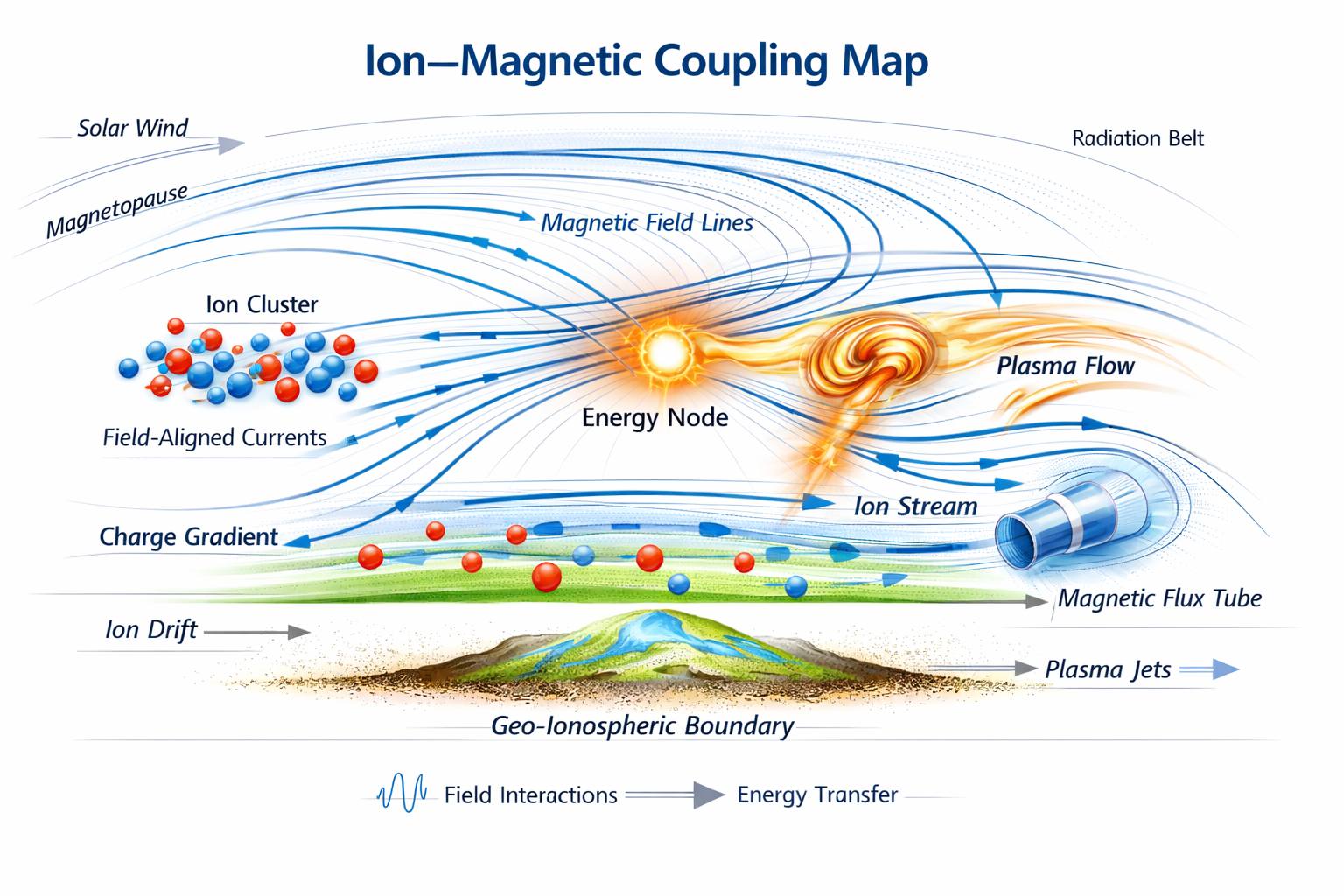
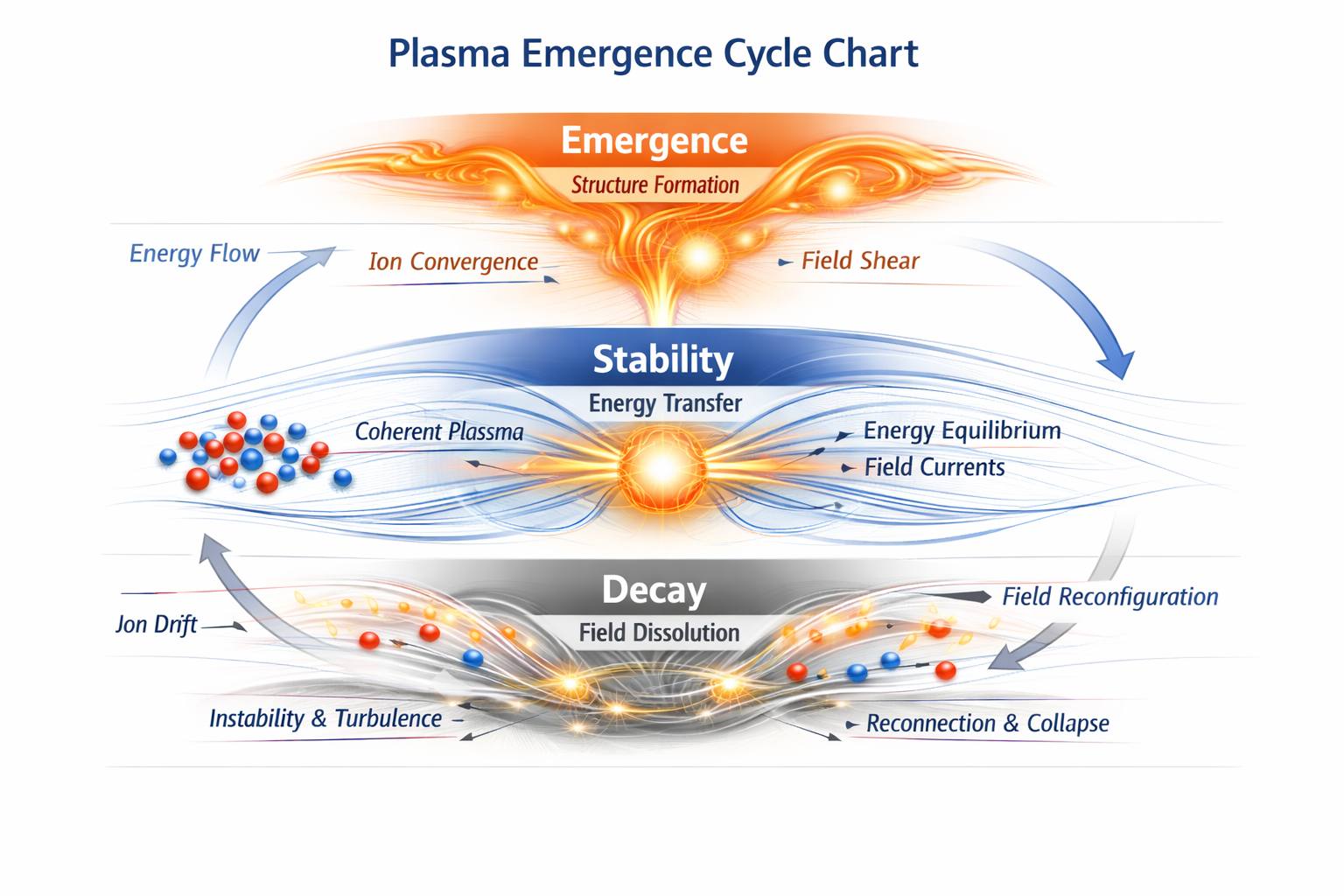
Across these layers, ion distributions create a structural foundation, magnetic fields impose directional tension, and plasma responds by forming transient yet coherent patterns. These patterns appear, stabilize for a period, and eventually dissolve. Their emergence is not noise—it is a predictable cycle that defines how energy concentrates and moves through near‑Earth space.
Within this architecture, plasma structures act as carriers of energy, ion clusters form natural nodes, and magnetic gradients guide the flow of charged particles. Together, they create a dynamic environment where energy is continuously redistributed. The ISSM Model maps this behavior and identifies where these structures form, how long they persist, and how they can be used for engineering purposes.
This framework also explains why ion colonies remain stable in specific orbital regions, why plasma structures emerge at particular altitudes, and how variations in ion density can generate field‑driven propulsion without the need for conventional fuel. The ISSM Model connects these phenomena into a unified structure that can be mapped, analyzed, and ultimately engineered.
By treating space as an organized architecture rather than a void, the ISSM Model opens the path toward new technologies in energy harvesting, orbital systems, and propulsion. It provides a structural understanding of how near‑Earth plasma behaves—and how its natural patterns can be transformed into functional systems.
Active Projects in the ISSM Division
- ISSM Energy Mapping Project
- Near‑Earth Plasma Structure Survey
- ISSM–Ion Colony Integration Model
- Field‑Driven Propulsion Prototype