
Propulsion
Deep‑Space Travel, Built Around the Energy of Space Itself
For decades, spacecraft have carried their limits with them.
More fuel means more weight, more cost, and more restrictions on how far we can go.
At RenergyAI, we explore a different path—one that treats space not as an empty backdrop, but as a medium filled with structure and motion.
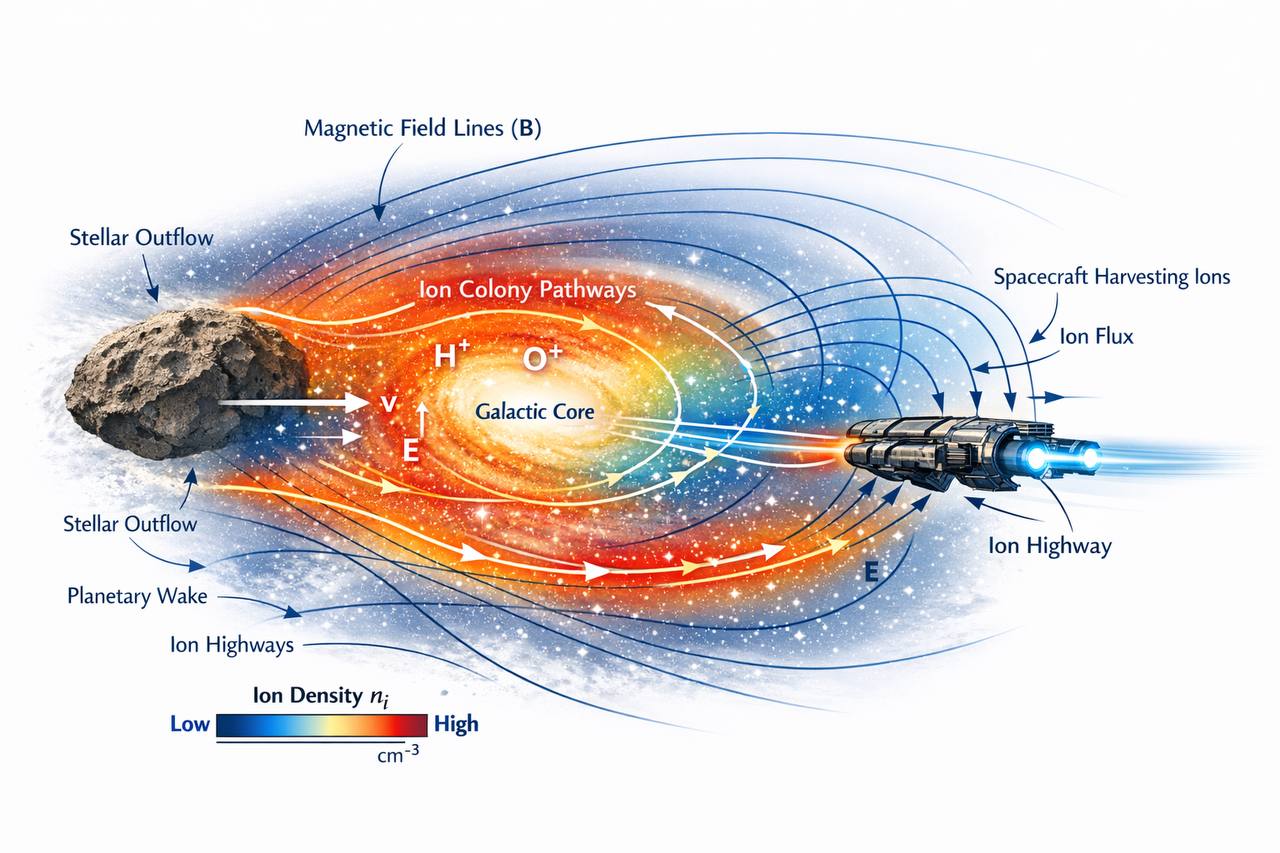
Across interplanetary space, natural flows of energy move quietly between stars and planets. These patterns aren’t random; they’re shaped by stellar activity and guided by magnetic environments. As they travel, they interact with planetary fields and leave visible traces in polar regions. For us, these traces are more than beautiful phenomena—they’re hints that space carries momentum, direction, and usable structure.
Our propulsion research begins with a simple idea:
if space carries organized energy, then spacecraft can learn to move with it.
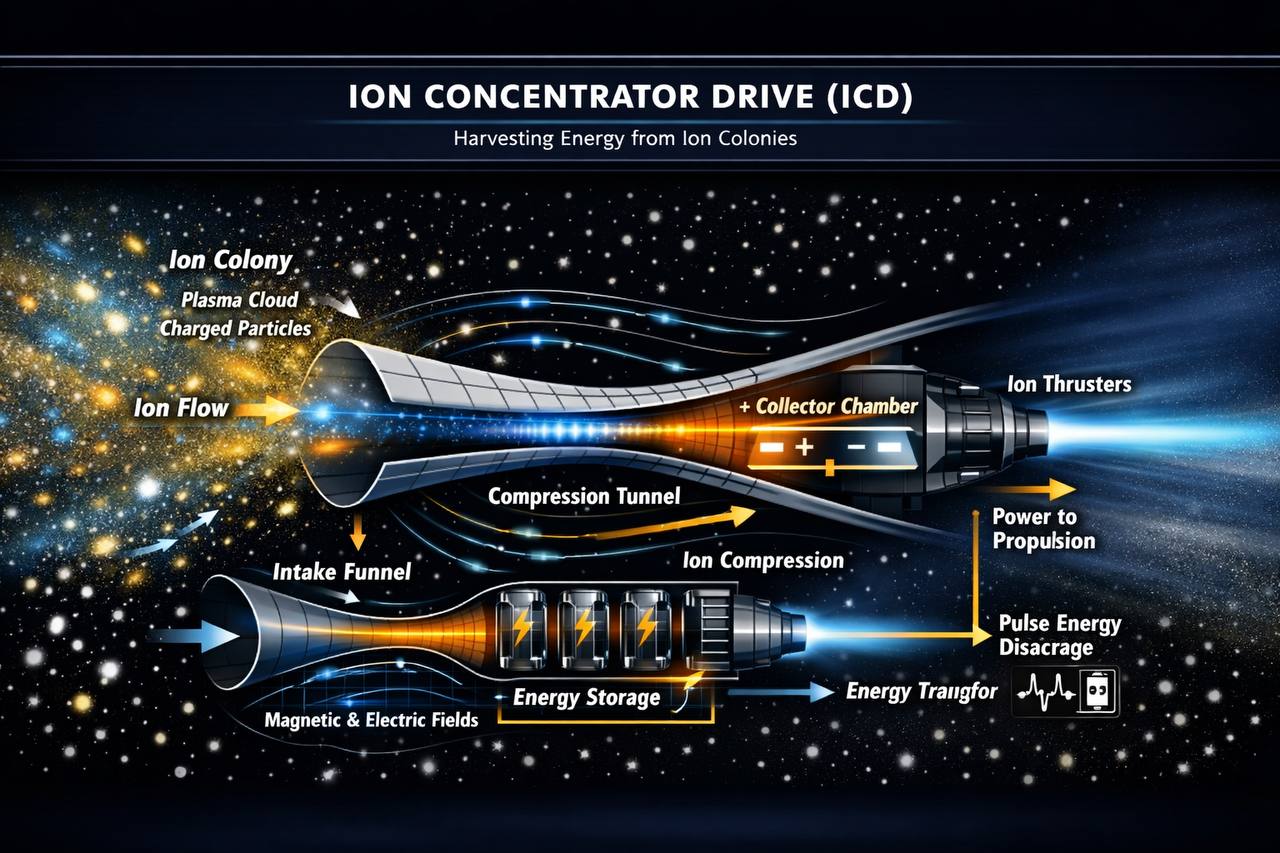
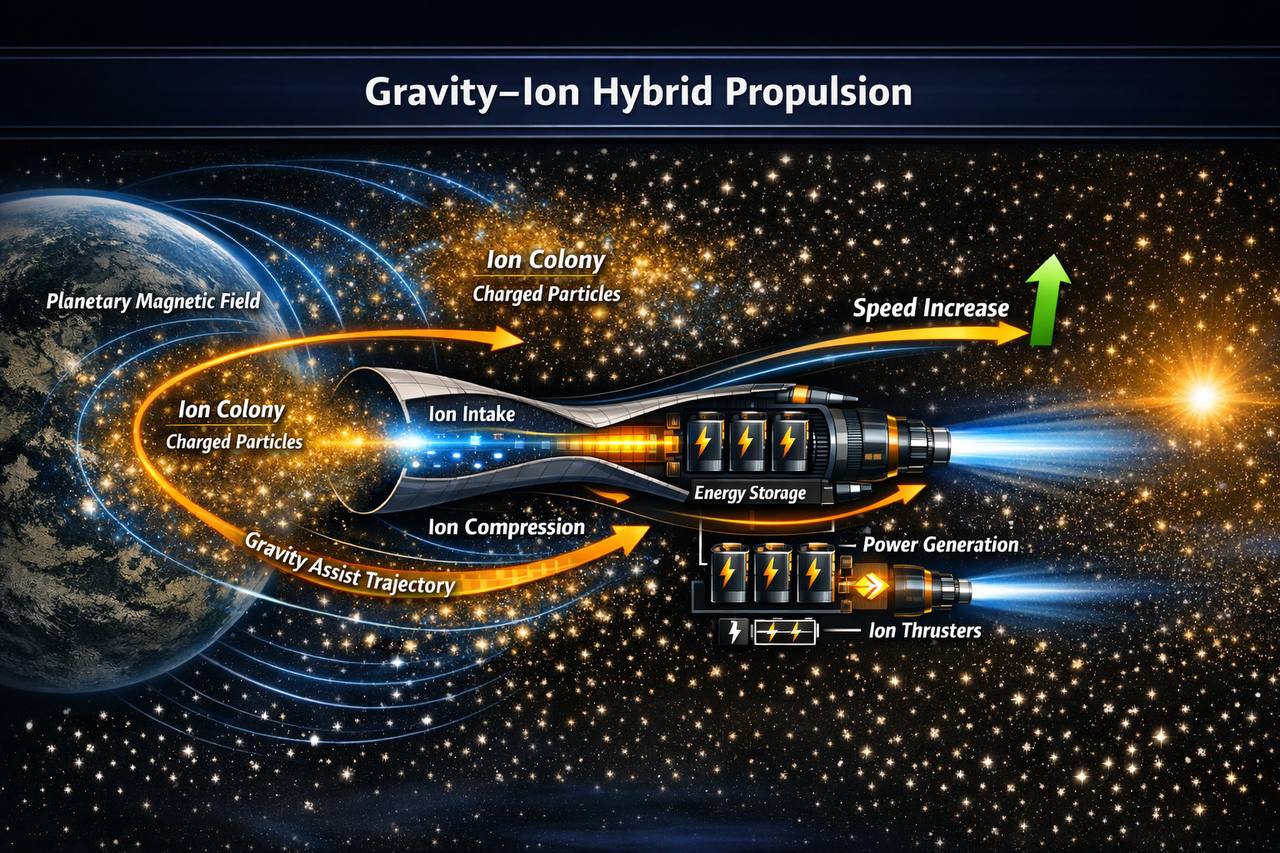
Instead of relying on heavy chemical engines, future vehicles could navigate by responding to the environment around them—using differences in magnetic structure, natural flows of charged particles, and the momentum already present in the medium they travel through.
This approach doesn’t fight space; it works with it.
We don’t reveal the technical architecture here.
This section is meant to show the bigger picture: a vision of long‑range travel that doesn’t depend on carrying everything from Earth. A vision where spacecraft tap into the dynamics already present in the interplanetary environment, allowing journeys that reach far beyond today’s limits.
Article Titles in This Section
- Field‑Driven Motion Concepts
- Magnetic Envelope Interaction
- Plasma Momentum Transfer
- Energy Structures as Propulsion Sources